
All Recommendations
Date of current publication: October 16, 2026
Lead authors: Maria Teresa (Tess) Timoney, MS, RN, CNM; Jessica M. Atrio, MD, MSc
Writing group: Rona M. Vail, MD, AAHIVS; Sanjiv S. Shah, MD, MPH, AAHIVS; Steven M. Fine, MD, PhD; Joseph P. McGowan, MD, FACP, FIDSA; Samuel T. Merrick, MD, FIDSA; Asa E. Radix, MD, MPH, PhD, FACP, AAHIVS; Anne K. Monroe, MD, MSPH; Jessica Rodrigues, MPH, MD; Christopher J. Hoffmann, MD, MPH; Brianna L. Norton, DO, MPH; Charles J. Gonzalez, MD
Committee: Medical Care Criteria Committee
| ALL RECOMMENDATIONS: SCREENING FOR CERVICAL DYSPLASIA AND CANCER IN ADULTS WITH HIV |
HPV Prevention
Cervical Cancer Prevention
Pelvic Health Exam
Age-Based Screening
Concomitant Screening for Anal Cancer and STIs
Post-Hysterectomy Cancer Screening
Post-Cervical Excision HPV Testing
Screening for Cervical Dysplasia During Pregnancy
Follow-Up of Abnormal Cervical Screening Results
Management of Cervical Cancer
|
Abbreviations: AIS, adenocarcinoma in situ; ART, antiretroviral therapy; ASC-H, atypical squamous cells, high-grade squamous intraepithelial lesions cannot be excluded; ASC-US, atypical squamous cells of undetermined significance; CIN, cervical intraepithelial neoplasia; HPV, human papillomavirus; HSIL, high-grade squamous intraepithelial lesion; LSIL, low-grade squamous intraepithelial lesion; NILM, negative for intraepithelial lesion or malignancy; STI, sexually transmitted infection. Note:
|
Purpose of This Guideline
This guideline was developed by the New York State Department of Health AIDS Institute (NYSDOH AI) to inform clinicians about cervical, vaginal, and genital screening for adults with HIV, to help them identify and treat precancerous lesions and prevent cervical cancer. Prevention and diagnosis of and screening methods for genital dysplasia in individuals with HIV are discussed, with the following goals:
- Increasing clinicians’ knowledge of screening methods and effective medical management of cervical, vaginal, or vulvar dysplasia.
- Emphasizing the role of antiretroviral therapy–associated viral suppression in improving clearance or suppression of human papillomavirus (HPV), preventing cervical dysplasia, and reducing cervical cancer in individuals with HIV.
- Promoting HPV vaccination and identification and treatment of precancerous and cancerous lesions to reduce the incident morbidity and mortality associated with genital HPV disease in individuals with HIV.
- Supporting the NYSDOH Prevention Agenda 2025-2030 and the New York State Ending the Epidemic initiative.
HPV-Associated Cervical Disease
The American Cancer Society estimates that in the United States in 2026, approximately 13,360 new cases of invasive cervical cancer will be diagnosed, and approximately 4,320 individuals will die from cervical cancer Siegel, et al. 2025. In New York State in 2022, there were 760 new cases of cervical cancer and, in 2023, 219 deaths from the disease in New York State CDC 2026c. Nearly all cases of cervical cancer are associated with human papillomavirus (HPV) infection CDC 2026b; CDC 2024; Chaturvedi, et al. 2011; Winer, et al. 2006. Individuals with HIV are at increased risk of HPV infection and related disease and are 5 times more likely to be diagnosed with cervical cancer than individuals without HIV Liu, et al. 2018; Grulich, et al. 2007. Persistence of HPV infection is associated with higher risk of disease progression and is more likely among people with HIV, especially with low CD4 counts (<200 cells/mL) Ahdieh, et al. 2001. Cervical cancer is an AIDS-defining illness.
In the general population, the HPV subtypes most commonly associated with cervical cancer are 16, 18, and 45 CDC 2024, and infection with multiple HPV subtypes has been associated with benign condylomata acuminata (genital warts), squamous intraepithelial lesions (SILs), vulvar and anal dysplasia, and anogenital carcinoma National Cancer Institute 2021. In individuals with HIV, a broader range of HPV oncogenic subtypes are associated with cervical dysplasia Orlando, et al. 2017.
HPV-related cervical cell abnormalities: Persistent HPV infection is necessary for the development of cervical SILs, which arise at the junction of the cervical squamous and columnar epithelium around the cervical os, the transformation zone. SILs are the most common type of precancerous cervical lesions, preceding nearly 80% of cervical cancers ICESCC 2007. Glandular carcinomas are the second most common type of cervical cancer ICESCC 2007. SILs occur more frequently in individuals with HIV than in those without HIV Liu, et al. 2018; Maiman, et al. 1993.
Cervical cell abnormalities can be categorized as high risk (cancer causing) or low risk (benign warts) based on oncogenic potential. High-risk HPV types related to anogenital cancers include 16, 18, 26, 31, 33, 35, 39, 45, 51, 52, 53, 56, 58, 59, 66, 67, 68, 69, 70, 73, and 82 Guan, et al. 2012; Hariri, et al. 2012. Although high-risk HPV types are detected in 99% of cervical cancers, types 16, 18, and 45 are the most oncogenic Clifford, et al. 2017; Keller, et al. 2015 and account for nearly 70% of all cervical cancers in the general population CDC 2024.
Adenocarcinoma of the cervix (AC) is more difficult to diagnose than squamous cell carcinoma and has a worse prognosis Suh, et al. 2023; Castanon, et al. 2016. AC typically develops within the single celled layer of glandular epithelium of the endocervical canal. Because this tissue is less likely to be effectively sampled, precursor changes may not be identified. The cytologic result likely to identify risk is atypical glandular cells (AGC). The histological precursor to AC is adenocarcinoma in situ (AIS), which is uncommon and likely underdiagnosed. Although squamous cell carcinoma and its precursor cervical intraepithelial neoplasia (CIN) 3 are highly associated with HPV types 16 and 18, adenocarcinoma and AIS are caused almost exclusively by HPV types 16, 18, and 45. A cytologic result of AGC in combination with HPV types 16, 18, or 45 is highly predictive of AIS and AC Schiffman, et al. 2023.
Among individuals with HIV, cervical cancers (both adenocarcinoma or squamous cell) are associated with high-risk HPV types 16, 18, 45, 51, 52, 53, 56, 58, and 59; low-risk types 6 and 11 are most commonly associated with benign disease (genital warts) McKenzie, et al. 2010. Identifying the presence of high-risk HPV types is central to managing abnormal cytology results in individuals with and without HIV Perkins, et al. 2020; Hariri, et al. 2012.
Higher risk of cervical disease associated with HIV: The risk of HPV-related cervical disease is increased in individuals with HIV McClymont, et al. 2020; Grabar, et al. 2019; Liu, et al. 2018; Konopnicki, et al. 2013. Cervical cancer has historically been a leading cause of cancer death among individuals with HIV Dryden-Peterson, et al. 2016, which may be related to the increased prevalence and persistence of HPV in this population Kojic, et al. 2014; Moscicki, et al. 2004.
HPV Prevention
| RECOMMENDATION |
HPV Prevention
|
Abbreviation: HPV, human papillomavirus. |
HPV Vaccine
In 2006, the U.S. Food and Drug Administration (FDA) approved a nonavalent vaccine that protects against nononcogenic HPV types 6 and 11 and oncogenic HPV types 16, 18, 31, 33, 45, 52, and 58 (Gardasil 9). Because it offers broader coverage of HPV types than other approved bivalent or quadrivalent vaccines, the nonavalent vaccine is the only HPV vaccine available in the United States (see Centers for Disease Control and Prevention [CDC] HPV Vaccination: Information for Health Care Providers for more). The HPV vaccine is approved by the FDA for preventive but not therapeutic use.
Extrapolating data from the demonstrated effectiveness of the quadrivalent HPV vaccine in older individuals Wilkin, et al. 2018, the FDA expanded the age range for approved use of the HPV vaccine in the United States from ages 9 to 26 years to ages 9 to 45 years FDA 2025. There is no specific mention of HIV infection in the updated FDA approval. Individuals with HIV have a robust and safe immune response to HPV vaccination. As in individuals without HIV, antibody titers and seropositivity rates in individuals with HIV decline over time but remain high Staadegaard, et al. 2022. The lack of formal protection and efficacy results preclude definitive conclusions on the clinical benefits of the HPV vaccine in individuals with HIV; however, given the increased lifetime burden of persistent HPV infection, disease, and morbidity, proactive vaccination is a strategic means of primary prevention and potential disease mitigation that should be strongly considered and encouraged Di Donato, et al. 2021; Karimi-Zarchi, et al. 2020; Lichter, et al. 2020.
When to Vaccinate
HPV vaccination for all individuals may be scheduled at the same time as standard adolescent vaccines offered at ages 9 to 12 years. If possible, the HPV vaccine series should begin at age 9 years Glidden, et al. 2016. The 3-dose vaccine is recommended for all patients with HIV aged 9 to 45 years. The nonavalent HPV vaccine should be recommended regardless of CD4 cell count and administered according to the CDC standard schedule for immunocompromised adults, children, and adolescents (a 3-dose series given at 0, 1–2, and 6 months).
HPV vaccination provides high levels of neutralizing antibodies for at least 5 years and is protective in individuals aged 26 years or younger who do not have HIV, regardless of history of sexual activity; however, the full length of its protection has not been established. In an observational study conducted in England that examined the effectiveness of a national HPV immunization program, the reduction in cervical cancer was greatest in individuals who received the vaccine at ages 12 to 13 years Falcaro, et al. 2021. Although data are limited, the immunogenicity of the HPV vaccine has been demonstrated in individuals with HIV Staadegaard, et al. 2022; Wilkin, et al. 2018; Kojic, et al. 2014.
In 2022, the World Health Organization endorsed an off-label single-dose schedule of the HPV vaccine for individuals aged 9 to 20 years, based on data from randomized controlled trials and systematic reviews that demonstrated similar protection against initial or persistent HPV infection Barnabas, et al. 2022; Whitworth, et al. 2020. However, individuals with HIV (regardless of age or antiretroviral therapy [ART] status) should continue to receive 3 HPV vaccine doses because of the increased lifetime HPV cancer risk, decreased geometric mean titers, and increased HPV seroconversion (measured by antibody levels) in this population WHO 2022.
HPV testing and vaccination: HPV testing is not recommended before vaccine administration. It is unlikely that an individual will have been infected with all the HPV types covered by the nonavalent vaccine; therefore, it is expected that the nonavalent HPV vaccine will be effective against any of the 9 HPV types or any HPV types to which the individual has not yet been exposed. There also may be beneficial prevention due to cross-reactivity with other HPV types not included in the nonavalent vaccine Wheeler, et al. 2012. Therefore, the nonavalent HPV vaccine should be offered to eligible individuals with HIV even if they have prior documented HPV infection.
Revaccination: Revaccination with the nonavalent HPV vaccine is not currently recommended for individuals previously immunized with the bivalent or quadrivalent HPV vaccine ACOG 2020; Petrosky, et al. 2015. Vaccination with the quadrivalent HPV vaccine has demonstrated cross-protection against other oncogenic HPV types Kemp, et al. 2011. There is no maximum interval between vaccine doses; as long as all 3 doses are given, there is no need to repeat doses if a vaccination is not given on schedule CDC 2025.
| KEY POINTS |
|
Other Forms of HPV Prevention
HPV infection is the most common sexually transmitted infection (STI) in the United States, and many individuals become infected with multiple types of HPV during their lives CDC 2026a. Most HPV infections resolve, become latent, or are not detectable on clinical assays within a few years of exposure and infection Ho, et al. 1998; Moscicki, et al. 1998; Evander, et al. 1995. HPV is transmitted via skin-to-skin contact, so barrier protection, such as male/insertive and female/receptive condoms, offers some but not full protection. Because prior identification of HPV infection in a sexual partner is unlikely, limiting the number of sexual partners may reduce but not eliminate an individual’s exposure to HPV Workowski, et al. 2021.
| KEY POINTS |
|
Cervical Cancer Prevention
| RECOMMENDATIONS |
Cervical Cancer Prevention
|
Abbreviations: ART, antiretroviral therapy; HPV, human papillomavirus. |
HPV vaccination, sustained access and adherence to effective ART and recommended screening and treatment, and overall sexual and preventive healthcare are essential to preventing cervical cancer in people with HIV. Minimizing gaps in care or refusal of care, with the goal of identifying treatable precancerous lesions (cervical intraepithelial neoplasia [CIN] 3 or greater), coupled with treatment and follow-up is a powerful strategy to decrease the incidence of HPV-related cancers in individuals with HIV [U.S. Preventive Services Task Force, et al. 2018; Massad, et al. 2017; Thorsteinsson, et al. 2016].
Risk calculation: Factors that increase the risk of cervical cancer include older age, HPV type 16 infection, persistent HPV infection, a cytology result of high-grade squamous intraepithelial lesions, a history of CIN 3, or previous cervical cancer. See the following resources for extensive discussion of risk and risk calculation:
- 2019 American Society for Colposcopy and Cervical Pathology (ASCCP) Risk-Based Management Consensus Guidelines for Abnormal Cervical Cancer Screening Tests and Cancer Precursors (see also letter summarizing updates through 2023)
- ASCCP Management Guidelines App Quick Start Guide
ART as prevention: Early in the epidemic, women with HIV presented with cervical cancer at later stages, when treatment was less successful Maiman, et al. 1993. Risk of incident cervical cancer for individuals with HIV has declined significantly over the last 20 years Hernandez-Ramirez, et al. 2017; Robbins, et al. 2017. ART has been found to reduce HPV acquisition, improve regression, and decrease rates of cervical disease progression Carlander, et al. 2018; Kelly, et al. 2018; Liu, et al. 2018; Ghebre, et al. 2017; Adler, et al. 2012. Rates of cervical dysplasia in women with HIV who are virally suppressed on ART and have a CD4 count ≥500 cells/mm3 are comparable to rates in women without HIV Silverberg, et al. 2018; Aho, et al. 2017; Massad, et al. 2017. Cervical disease pathogenesis is the same in women with HIV who are virally suppressed and have a CD4 count ≥500 cells/mm3 as for women who do not have HIV Davies, et al. 2015; Kim, et al. 2013; Konopnicki, et al. 2013; Harris, et al. 2005.
Screening: Countries with a national screening program have lower rates of cervical cancer among women with HIV, and some U.S. cohorts have demonstrated comparable rates of invasive cervical cancer in people with or without HIV Massad, et al. 2009. Cervical cancer screening and prompt referral for treatment of precancerous lesions and invasive cervical cancer are most effective when integrated into routine HIV services, ideally within HIV clinics McCormick Viens, et al. 2023. Universal access to comprehensive HIV treatment, health care maintenance, and HPV prevention and cancer screening are critical for reducing the burden of HPV-related cancers in people with HIV Ghebre, et al. 2017.
Tobacco use cessation: Tobacco use is associated with development of genital HPV lesions and disease Gallaway, et al. 2018, and cigarette smoking potentiates the risk for acquisition of high-grade CIN in individuals with HIV Massad, et al. 2012a. Clinicians should inform patients of the risks of tobacco use and encourage reduction or cessation of use of all tobacco products as a component of prevention of genital HPV disease.
| RESOURCES: Tobacco Use Cessation |
|
Screening for Cervical Abnormalities
| RECOMMENDATIONS |
Pelvic Health Exam
Age-Based Screening
Concomitant Screening for Anal Cancer and STIs
Post-Hysterectomy Cancer Screening
Post-Cervical Excision HPV Testing
|
Abbreviations: AIS, adenocarcinoma in situ; CIN, cervical intraepithelial neoplasia; HPV, human papillomavirus; HSIL, high-grade squamous intraepithelial lesion; NILM, negative for intraepithelial lesion or malignancy; STI, sexually transmitted infection. Note:
|
Purpose of Screening
The primary goal of cervical cytology is to identify and treat precancerous lesions—defined as CIN 3, AIS, and in rare cases, invasive cervical cancer Perkins, et al. 2020. Cervical cancer is a relatively rare finding in the United States; nevertheless, identification and treatment are essential and may include more frequent testing, referral for colposcopy and directed biopsy, and subsequent treatment of biopsy-proven histologic abnormalities. CIN 2 has appreciable regression rates Perkins, et al. 2020.
A histology result of CIN 3 or higher is the established surrogate for cancer risk. CIN 3 is a finding of severely atypical cellular changes that encompass greater than two-thirds of the epithelial thickness and include full-thickness lesions. Previous terms for CIN 3 were “severe dysplasia” and “carcinoma in situ.” CIN 3 was chosen instead of CIN 2 because it is a more pathologically reproducible diagnosis Perkins, et al. 2020. The HPV type distribution in CIN 3 lesions more closely approximates that of invasive cervical cancer.
How cervical cytology results are reported: Cervical cytology currently uses the Bethesda Classification System as standard nomenclature to describe abnormal results that may require further follow-up CPBG 2016; Massad, et al. 2013. The Bethesda Classification System (see Box 1, below) also describes the degree of neoplastic change found on biopsy. These naming conventions are not interchangeable (see guideline section Follow-Up of Abnormal Cervical Screening Results).
| Box 1: Molecular, Cytologic, and Histologic Classifications of Cervical Dysplasia [a] |
Bethesda Classification System (describes cervical cytology results):
Primary HPV testing:
Cervical intraepithelial lesion or neoplasia (describes histology obtained at biopsy):
|
|
Note:
|
Who to Screen
Age-based screening: Cervical dysplasia is caused by genital HPV, an STI. Consistent with American Society for Colposcopy and Cervical Pathology (ASCCP) guidelines Perkins, et al. 2020, cervical cancer screening in individuals younger than 30 years with HIV who have a cervix should begin within at least 2 years of first receptive sexual activity or by age 21 years Keller, et al. 2012. HPV cotesting is not recommended in this age group. For individuals aged 30 years and older, cervical cytology and HPV cotesting should be performed within 3 years of previous negative testing.
HIV has been associated with an increased lifetime risk of cervical cancer; therefore, the ASCCP guidelines recommend continued screening in this population beyond age 65 years Perkins, et al. 2020. However, patients and their clinicians may decide together to discontinue screening after assessment of the risks and benefits, possible mitigating factors to ongoing risk for HPV infection, and the purpose of screening. Factors to consider include HPV status and risk of acquisition, history of screening results and risk of cervical cancer, the burden of screening and associated follow-up, viral suppression status, comorbidities, and life expectancy DHHS 2024; Massad, et al. 2021; Aserlind, et al. 2017.
HIV viral suppression and lifetime prognosis: Patients with HIV who are virally suppressed and have demonstrated adherence to HIV care and primary care, who have negative cytology and negative HPV test results, no genital or pelvic complaints, do not use tobacco products, and do not have any other cervical cancer risk factors may benefit from cervical screening every 5 years Robbins, et al. 2017. When navigating extended screening intervals or discontinuation of screening based on lifetime prognosis, individualized patient-centered shared decision-making that addresses lifetime risk of HPV-related disease, goals for screening, cultural and personal values, and benefits of a personalized screening interval is crucial.
| KEY POINTS |
|
Transgender and gender-diverse individuals: Although the recommendations in this guideline are based on data from studies in cisgender women, this committee supports extrapolation of that data to support recommendations for all adults with HIV who are eligible for cervical screening.
Inclusive and culturally sensitive healthcare that acknowledges the needs of transgender, transmasculine, transfeminine, and nonbinary patients should include an anatomical inventory that identifies which organs are present and absent to determine and meet the screening and healthcare needs of each patient regardless of their gender expression. It is important that care providers and facilities establish a safe and welcoming environment for transgender patients UCSF 2016a. In the United States, 2.8 million people identify as transgender, including 2.1 million adults, 33% of whom are transgender women, 34% transgender men, and 33% nonbinary Herman and Flores 2025. Asking patients to provide details about all gender-affirming and gynecologic surgical procedures will help establish the need for screening for HPV-related cancers (for terminology and definitions related to transgender care, see the University of California San Francisco Transgender Care and Treatment Guidelines > Terminology).
Evidence, although limited, shows that transgender and gender-diverse individuals are less likely to have undergone recommended cancer screenings than their cisgender counterparts, particularly transgender men and cervical cancer screening Chan, et al. 2024; Oladeru, et al. 2022. Transgender men who have a uterine cervix are at risk for cervical cancer, yet screening rates are lower in this population than in cisgender women, largely because of barriers to inclusive, informed medical care for transgender people. Testosterone use in transgender men causes vaginal atrophy, which is associated with high rates of cytology results that are classified as “insufficient.” Notation of testosterone use and amenorrhea, when indicated, will facilitate accurate interpretation of cell morphology in transgender men Tabaac, et al. 2018; UCSF 2016b; Peitzmeier, et al. 2014.
Transgender women may undergo genital reconstruction, or vaginoplasty, to create a neovagina. There are no studies to support cervical or vaginal screening of a neovagina; however, visual examination to assess symptoms or as part of routine screening is appropriate Fierz, et al. 2019; UCSF 2016b; van der Sluis, et al. 2016; Heller 2015.
| KEY POINTS |
|
HPV Testing
Primary HPV testing: HPV testing is used as a primary screening tool to assist risk stratification. The U.S. Food and Drug Administration (FDA) has approved multiple assays for primary HPV testing to be used for screening individuals aged 25 years and older in the general population. Although data are limited on the use of this screening strategy for people with HIV in the United States, research from a retrospective cohort suggests that primary HPV screening with reflex to 16/18 genotyping in cervical cancer screening for people with HIV may result in fewer colposcopies over the subsequent 1 to 2 years than cytology with HPV testing Strickler, et al. 2020.
Primary HPV testing plays an important role in settings where access to cytology is limited, as in many low- and middle-income countries. In 2020, the World Health Organization (WHO) launched an initiative to eliminate cervical cancer with the benchmark goal that by 2030, 90% of female children under the age of 15 be vaccinated against HPV, 70% of individuals with a cervix undergo screening, and 90% of those who are found to have precancerous lesions or invasive cervical cancer receive treatment. The WHO guidelines issued in 2021 explicitly endorse the use of primary HPV screening for people living with HIV, with cytology as a tool to triage the need for treatment when HPV test results are positive WHO 2021. Modeling was used to evaluate a range of screening strategies for women living with HIV in Tanzania where HIV is endemic, and it was concluded that screening with primary HPV testing every 3 years most effectively reduced cervical cancer incidence Hall, et al. 2023.
HPV cotesting: Cervical cytology with HPV cotesting has been used to extend cervical screening intervals to every 5 years in women without HIV U.S. Preventive Services Task Force, et al. 2018; ACOG 2016; CPBG 2016. However, cervical cytology with HPV cotesting is not indicated for individuals younger than 30 years because resolution of HPV infection and cervical dysplasia is likely regardless of HIV status U.S. Preventive Services Task Force, et al. 2018; Plummer, et al. 2007; Woodman, et al. 2001. Aggressive treatment of dysplasia from transient HPV infection may damage the cervix, contribute to preterm delivery, and be more harmful than beneficial in this age group Conner, et al. 2014; Bruinsma and Quinn 2011. HPV cotesting is a valuable adjunct to cervical cytology in individuals with HIV aged 30 years and older Alade, et al. 2017; Castle, et al. 2012; Keller, et al. 2012.
Self-collected specimens for HPV testing: HPV testing specimens can be self- or clinician collected. FDA approval for self-collection specifies that screening take place in a clinical setting. In 2021, the WHO endorsed self-collection as a way of expanding cervical cancer screening beyond traditional clinician-performed exams WHO 2021. In December 2024, the U.S. Preventive Services Task Force (USPSTF) issued a draft recommendation statement that included self-collection with clinician-collected cytology and HPV testing U.S. Preventive Services Task Force 2024. Self-collection was also included in the 2025 recommendations from the Enduring Consensus Cervical Cancer Screening and Management Guidelines Committee Wentzensen, et al. 2025.
Self-collected HPV screening has been shown to have broad acceptability, and its benefits include self-efficacy, privacy, convenience, and practicality. Self-collection avoids the physical discomfort of the traditional pelvic exam, is less invasive, and is self-paced Camara, et al. 2021; Wang, et al. 2020. Patient concerns regarding self-collection center on accuracy, safety, and sterility of the swab, with lack of accuracy of the sample the most prevalent concern, and some patients have expressed concern that self-collected samples may not be as reliable as clinician-collected samples Wang, et al. 2020. However, data from more than 50 paired clinical accuracy studies showed that, for precancer detection, polymerase chain reaction (PCR)-based assays were equally sensitive on self-collected specimens and relative specificity was high compared with clinician-collected specimens Wentzensen, et al. 2025. Multiple FDA-approved self-collection assays for HPV testing are PCR-based. Further research is being conducted to determine the optimal interval for repeating a negative test, but the current 3-year interval is recognized as safe.
| RESOURCES |
|
Although there is no evidence on self-collected HPV testing specifically in people with HIV, self-collection is widely recognized as a powerful tool for evaluating under screened populations, including transgender and nonbinary individuals who may be uncomfortable accessing traditional gynecologic care. Self-collection may also increase screening among individuals who seldom access healthcare, especially those with physical, social, psychological, or other barriers to care, such as a history of physical assault, trauma, coercion, or post-traumatic stress disorder.
Self-collection is endorsed by the USPSTF, the ASCCP, and the American Cancer Society for individuals aged 30 years and older Perkins, et al. 2026; U.S. Preventive Services Task Force 2024; Perkins, et al. 2020. Individuals younger than 30 years should continue to be screened by cytology with reflex HPV testing only for samples that yield atypical squamous cells of undetermined significance (ASC-US) or greater, to avoid overtreatment of lesions or abnormalities that might resolve on their own in this age group.
For individuals living with HIV, optimal screening for anogenital cancers includes a yearly visual exam to identify vulvar, vaginal, and perianal changes. However, if an individual has persistently declined pelvic exams, the clinician and patient may share the decision to begin screening with a self-collected swab. It is essential that individuals who are being offered self-collection have been educated regarding the risks of HPV, the benefit of a more complete exam, and the need for follow-up care, including colposcopy in the event of a positive result.
| KEY POINTS |
|
Concomitant Screening for Anal Cancer and STIs
Anal SILs have been associated with concurrent cervical SILs; however, they can also occur independently. Anal cancer screening should be performed according to the NYSDOH AI guideline Screening for Anal Dysplasia and Cancer in Adults With HIV. Regardless of cytology results, it is important that screening for STIs is performed routinely in patients who engage in risk behaviors (for more information, see CDC 2021 Sexually Transmitted Infections Treatment Guidelines).
Post-Hysterectomy Cancer Screening
After a patient who does not have HIV has had a hysterectomy for benign disease, routine screening for vaginal cancer is not generally recommended. However, because HIV and HPV infection increase the risk of vaginal SILs Bradbury, et al. 2019; Massad, et al. 2012b, vaginal cytologic testing after hysterectomy is recommended for patients with HIV Smeltzer, et al. 2016. SILs on the vaginal cuff can recur from a latent anogenital HPV infection or as primary disease after hysterectomy, not related to previous cervical infection Smeltzer, et al. 2016; Saslow, et al. 2012.
If the indication for hysterectomy in a patient with HIV is unknown, screening should be performed as it would be in a patient with an intact cervix. Individuals with HIV who have undergone hysterectomy and have any history of high-grade CIN, AIS, or invasive cervical cancer, regardless of whether the hysterectomy was performed for that disease or subsequently for benign disease, should receive a minimum of 3 consecutive negative annual HPV tests before long-term surveillance with cervical cytology and HPV testing every 3 years is initiated Perkins, et al. 2020; Khan, et al. 2016.
The FDA has not approved HPV testing for vaginal samples; however, the sensitivity of HPV-based testing seems superior to cytology alone when screening for high-grade SIL after hysterectomy Perkins, et al. 2020; Khan, et al. 2016. Abnormal vaginal screening results should be managed according to colposcopy guidelines for vaginal cytology Perkins, et al. 2020.
Screening for Cervical Dysplasia During Pregnancy
| RECOMMENDATIONS |
Screening for Cervical Dysplasia During Pregnancy
|
Abbreviations: ASC-H, atypical squamous cells, high-grade squamous intraepithelial lesions cannot be excluded; ASC-US, atypical squamous cells of undetermined significance; HPV, human papillomavirus; LSIL, low-grade squamous intraepithelial lesion. |
Pregnant individuals with HIV should undergo cervical cytology and HPV cotesting as appropriate for their age group. Referral to a practitioner skilled and experienced in colposcopy is recommended for all pregnant patients with cervical screening results of persistent ASC-US, ASC-US with HPV, negative cytology with persistently positive HPV, ASC-H, or LSIL or greater.
The natural history, pathogenesis, rate of progression, and prognosis of cervical cancer are not affected by pregnancy. Colposcopy-directed biopsies are generally safe during pregnancy but should be performed only if a lesion appears to be carcinoma in situ or cancer UpToDate 2025. Endocervical curettage, endometrial biopsy, and treatment without biopsy are unacceptable practices during pregnancy. Diagnostic excisional procedure or repeat biopsy is recommended only if cancer is suspected based on cytology, colposcopy, or histology results Perkins, et al. 2020. Shared decision-making that accounts for a patient’s risk of cancer, ongoing monitoring and treatment plan, pregnancy options, and reported values and goals should be applied when managing cervical dysplasia in pregnancy.
Close follow-up of abnormal cytology or colposcopy results is critical in the postpartum period. The colposcopic exam should be performed no earlier than 4 weeks after delivery and ideally no later than 8 weeks. Biopsy during pregnancy should be conducted for any lesions suspicious for cancer to avoid delays in treatment. To prevent loss to follow-up, the clinician should refer for postpartum colposcopy in the antepartum period, making sure to include the provision of ongoing health insurance.
| KEY POINT |
|
Follow-Up of Abnormal Cervical Screening Results
| RECOMMENDATIONS |
Follow-Up of Abnormal Cervical Screening Results
|
Abbreviation: HPV, human papillomavirus. |
Colposcopy with biopsy is the recommended diagnostic test for cervical dysplasia identified through cervical cytology and HPV testing. Colposcopy is not used for primary screening. Colposcopy visually locates specific lesions for directed biopsy and histologic diagnosis and has better sensitivity and specificity for SILs than cytology alone. Abnormal cytology results that require colposcopy include atypical squamous cells of undetermined significance (ASC-US) with high-risk HPV; atypical squamous cells, high-grade squamous intraepithelial lesion cannot be excluded (ASC-H); atypical glandular cells (AGC), low-grade squamous intraepithelial lesion (LSIL); high-grade squamous intraepithelial lesion (HSIL), repeated positive high-risk HPV results with negative cervical cytology results; and repeated ASC-US cytology results regardless of HPV result. See further discussion of these results below.
Figure 1, below, shows appropriate follow-up of abnormal cervical cytology results in patients with HIV.
Figure 1: Follow-Up of Abnormal Cervical Cytology Results in Patients With HIV

Abbreviations: ASC-H, atypical squamous cells, high-grade squamous intraepithelial lesion cannot be excluded; ASC-US, atypical squamous cells of undetermined significance; ASCCP, American Society for Colposcopy and Cervical Pathology; CIN, cervical intraepithelial neoplasia; HPV, human papillomavirus; HSIL, high-grade squamous intraepithelial lesion; LSIL, low-grade squamous intraepithelial lesion; NILM, negative for intraepithelial lesion or malignancy.
Notes:
- HPV reflex testing should be performed in patients younger than 30 years with a positive cervical cytology result; in patients aged 30 years and older, HPV cotesting is recommended.
- Cervical screening every 5 years may benefit individuals with HIV who are virally suppressed and adherent to HIV and primary care and have negative cytology and HPV test results, no genital or pelvic complaints, no tobacco use, and no other cervical cancer risk factors.
- If cotesting was not performed, then HPV reflex testing is indicated following an abnormal cytology result.
- For non-high-grade CIN, refer to ASCCP recommendations for management of LSIL (CIN 1) preceded by ASC-H or HSIL cytology.
- In patients younger than 25 years, immediate excision is not recommended; in nonpregnant patients aged 25 years and older, the decision regarding expedited treatment versus colposcopy with biopsy should be based on shared decision-making between the patient and clinician.
- Perkins RB, Guido RS, Castle PE, et al. 2019 ASCCP risk-based management consensus guidelines for abnormal cervical cancer screening tests and cancer precursors. J Low Genit Tract Dis 2020;24(2):102-31. [PMID: 32243307]
Download Figure 1: Follow-Up of Abnormal Cervical Cytology Results in Patients With HIV
Figure 2, below, shows appropriate follow-up of primary HPV testing results in patients with HIV.
Figure 2: Follow-Up of Primary HPV Testing Results in Patients With HIV

Abbreviations: ASCCP, American Society for Colposcopy and Cervical Pathology; ASC-US, atypical squamous cells of undetermined significance; HPV, human papillomavirus; NILM, negative for intraepithelial lesion or malignancy.
Note:
- Perkins RB, Guido RS, Castle PE, et al. 2019 ASCCP risk-based management consensus guidelines for abnormal cervical cancer screening tests and cancer precursors. J Low Genit Tract Dis 2020;24(2):102-31. [PMID: 32243307]
Download Figure 2: Follow-Up of Primary HPV Testing Results in Patients With HIV
Figure 3, below, shows appropriate follow-up of a cervical cytology result of AGC in patients with HIV.
Figure 3: Follow-Up of Cervical Cytology Result of Atypical Glandular Cells in Patients With HIV [a]

Abbreviations: AGC, atypical glandular cells; HPV, human papillomavirus.
Notes:
- Adapted with permission from the American Society for Colposcopy and Cervical Pathology. See Perkins RB, Guido RS, Castle PE, et al. 2019 ASCCP risk-based management consensus guidelines for abnormal cervical cancer screening tests and cancer precursors. J Low Genit Tract Dis 2020;24(2):102-31 [PMID: 32243307]
- Conditions that increase risk for endometrial neoplasia include abnormal uterine bleeding, obesity, or conditions suggesting chronic anovulation.
ASC-US: Because a cervical cytology result of ASC-US indicates the inability to determine whether the cellular abnormality is benign or high risk, an HPV test in response to the cytology result (HPV reflex testing) is recommended regardless of a patient’s age. The purpose is to identify possible high-risk HPV infection, which, if present, requires follow-up with colposcopy.
ASC-H: A cervical cytology result of ASC-H suggests that a lesion is precancerous, and colposcopy is indicated regardless of the HPV cotest result.
LSIL: A cervical cytology result of LSIL indicates early cell changes associated with HPV infection. In individuals who do not have HIV, LSILs tend to be associated with transient changes that regress over time UpToDate 2025; Solomon, et al. 2002. Data on women with HIV indicate higher rates of recurrence and progression of LSILs than observed among those without HIV Zeier, et al. 2012; Nappi, et al. 2005; Robinson, et al. 2003. Individuals with HIV and LSILs on cytology should be referred for colposcopy.
AGC: Any cervical cytology result of AGC requires immediate follow-up with colposcopy and further evaluation (see Figure 3, above). Treatment decisions are based on the resulting tissue diagnosis. Glandular carcinoma of the cervix may be preceded by a negative cytology result or a test result indicating the presence of AGC Moukarzel, et al. 2017. A cytology result of AGC may indicate a precursor lesion for adenocarcinoma of the cervix (AC), which is caused almost entirely by a subset including HPV types 16, 18, and 45 Guan, et al. 2013; de Sanjose, et al. 2010. Adenocarcinoma in situ (AIS) is also caused primarily by these same 3 HPV types. The combined finding of HPV 16, 18, or 45 and AGC indicates a greatly elevated risk of in situ and invasive cervical adenocarcinoma Schiffman, et al. 2023.
An AGC result of atypical endometrial cells indicates a risk of endometrial cancer, and all individuals with atypical endometrial cells require endometrial sampling. Although the mean age of presentation for endometrial cancer is 60 years, premenopausal individuals with histories of abnormal uterine bleeding, obesity, or conditions suggesting chronic anovulation are also at greater risk of endometrial cancer. Although the incidence of endocervical adenocarcinoma is lower than that of squamous cell carcinoma of the cervix, endocervical adenocarcinoma is associated with a worse prognosis Arshi and Farci 2022.
HSIL: A cytology result of HSIL suggests that a lesion is more likely to be precancerous. HSILs are associated with high-risk HPV types and have a high risk of progression to cervical intraepithelial neoplasia (CIN) or cancer UpToDate 2025. In individuals with HIV, both LSILs and HSILs require close follow-up and referral for colposcopy.
For nonpregnant individuals aged 25 years and older with HSILs, current American Society for Colposcopy and Cervical Pathology (ASCCP) guidelines for the general population recommend consideration of immediate treatment—destruction or excision of precancerous lesions—in cases in which the risk of CIN 3 or higher is 25% or more Perkins, et al. 2020. Treatment without colposcopy removes an intermediate step for those at highest risk for CIN 3 or higher. In cases in which the risk of CIN 3 or higher exceeds 60%, definitive management with direct excision for treatment without colposcopic-guided biopsy is preferred. Reasons for considering expedited treatment vary and may include limited access to healthcare. Immediate treatment without histologic confirmation is not recommended for individuals younger than 25 years because of the very low cervical cancer rates and high rates of HSIL regression in this population Perkins, et al. 2020. Because individuals with HIV are known to have an elevated risk of cervical cancer, a thorough discussion of the risks and benefits of cervical dysplasia treatment is crucial during shared decision-making with patients.
CIN: As described in the guideline section Screening for Cervical Abnormalities, SILs are cytologic findings and CIN is a histologic finding found on biopsy performed at the time of colposcopy.
CIN 1 describes a low-grade lesion and refers to mildly atypical cellular changes in the lower third of the epithelium; HPV cytopathic effect (koilocytotic atypia) is often present.
CIN 2 (formerly called moderate dysplasia) describes a high-grade lesion and refers to atypical cellular changes confined to the basal two-thirds of the epithelium with preservation of epithelial maturation. However, CIN 2 has poor reproducibility and is likely a heterogeneous mix that includes lesions that could be called CIN 1 or 3. CIN 2 is stratified according to p16 immunostaining to identify precancerous lesions. Specimens that are p16 negative are referred to as LSILs and those that are p16 positive are referred to as HSILs. Because of the poor reproducibility of CIN 2, CIN 2 and 3 are often classified together as “CIN 2/3.”
CIN 3 (formerly called severe dysplasia or carcinoma in situ) describes a high-grade lesion and refers to severely atypical cellular changes encompassing greater than two-thirds of the epithelial thickness and includes full-thickness lesions UpToDate 2025.
Indications for expedited treatment: ASCCP guidelines urge consideration of diagnostic excision and treatment without the intermediary step of colposcopy in cases in which risk of CIN 3 exceeds 25%; expedited treatment is preferred when risk exceeds 60% Perkins, et al. 2020. For discussion of risk calculation, see the 2019 ASCCP Risk-Based Management Consensus Guidelines for Abnormal Cervical Cancer Screening Tests and Cancer Precursors. The ASCCP guidelines do not specifically address individuals with HIV.
| KEY POINTS |
|
Management of Cervical Cancer
| RECOMMENDATIONS |
Management of Cervical Cancer
|
Individuals with cervical cancer may have few and nonspecific symptoms; when they present with symptoms, more advanced disease is often found. Vaginal bleeding and postcoital bleeding are the most common symptoms. Malodorous vaginal discharge, pelvic pain, back pain, and lower abdominal pain are also common. Weight loss, leg pain, edema, and obstructive uropathy indicate advanced disease American Cancer Society 2025. Patients with a diagnosis of cervical cancer, with or without symptoms, should be referred immediately for assessment and management of their disease. Support services often facilitate patient engagement and maintenance in cancer treatment and care.
The standard therapeutic approach to treating cervical cancer in individuals with HIV is the same for individuals without HIV. Treatment by high-volume surgeons at high-volume hospitals with higher rates of guideline-based care is associated with better cervical cancer survival outcomes Bonte, et al. 2019; Liu, et al. 2018; Uppal, et al. 2017; ACOG 2016; Showalter, et al. 2016. Appropriate staging, management, and therapy for cervical cancer should be determined by a gynecologic oncologist or a clinician with similar training and experience. Although the effect of treatment by gynecologic oncology specialists has not been studied among patients with cervical cancer, research suggests that patients with other gynecologic cancers experience better survival outcomes, especially when treated at National Cancer Institute Comprehensive Cancer Centers Bonte, et al. 2019; Wright, et al. 2017; Bristow, et al. 2015; Minig, et al. 2015; Mercado, et al. 2010.
Management and therapy should be based on the stage of disease. Treatment may include cone biopsy/loop electrosurgical excision, total hysterectomy, radical hysterectomy, radiation therapy, chemotherapy, and combined modality therapy with surgery, radiation, and chemotherapy. The increased risk of treatment failure and high recurrence rate in individuals with HIV demand close follow-up by a multidisciplinary team of clinicians even after definitive cervical cancer treatment.
References
ACOG. Practice bulletin no. 167: gynecologic care for women and adolescents with human immunodeficiency virus. Obstet Gynecol 2016;128(4):e89-110. [PMID: 27661659]
ACOG. Human papillomavirus vaccination: ACOG committee opinion, number 809. Obstet Gynecol 2020;136(2):e15-21. [PMID: 32732766]
Adler D. H., Kakinami L., Modisenyane T., et al. Increased regression and decreased incidence of human papillomavirus-related cervical lesions among HIV-infected women on HAART. AIDS 2012;26(13):1645-52. [PMID: 22555167]
Ahdieh L., Klein R. S., Burk R., et al. Prevalence, incidence, and type-specific persistence of human papillomavirus in human immunodeficiency virus (HIV)-positive and HIV-negative women. J Infect Dis 2001;184(6):682-90. [PMID: 11517428]
Aho I., Kivela P., Haukka J., et al. Declining prevalence of cytological squamous intraepithelial lesions of the cervix among women living with well-controlled HIV - most women living with HIV do not need annual PAP smear screening. Acta Obstet Gynecol Scand 2017;96(11):1330-37. [PMID: 28832899]
Alade R. O., Vragovic O., Duffy C., et al. Human papillomavirus co-testing results effectively triage normal cervical cytology in HIV-positive women aged 30 years and older. J Low Genit Tract Dis 2017;21(2):125-28. [PMID: 28257290]
American Cancer Society. Signs and symptoms of cervical cancer. 2025 Jul 1. https://www.cancer.org/cancer/types/cervical-cancer/detection-diagnosis-staging/signs-symptoms.html [accessed 2026 Apr 1]
Arshi, J.. StatPearls: atypical glandular cells (AGS). 2022 Oct 17. https://www.ncbi.nlm.nih.gov/books/NBK564318/ [accessed 2026 Jun 23]
Aserlind A., Maguire K., Duthely L., et al. Women living with HIV over age of 65: cervical cancer screening in a unique and growing population. Infect Dis Obstet Gynecol 2017;2017:2105061. [PMID: 29075090]
Barnabas R. V., Brown E. R., Onono M. A., et al. Efficacy of single-dose HPV vaccination among young African women. NEJM Evid 2022;1(5):EVIDoa2100056. [PMID: 35693874]
Bonte A. S., Luyckx A., Wyckmans L., et al. Quality indicators for the management of endometrial, cervical and ovarian cancer. Eur J Surg Oncol 2019;45(4):528-37. [PMID: 30337202]
Bradbury M., Xercavins N., Garcia-Jimenez A., et al. Vaginal intraepithelial neoplasia: clinical presentation, management, and outcomes in relation to HIV infection status. J Low Genit Tract Dis 2019;23(1):7-12. [PMID: 30161052]
Bristow R. E., Chang J., Ziogas A., et al. Impact of National Cancer Institute Comprehensive Cancer Centers on ovarian cancer treatment and survival. J Am Coll Surg 2015;220(5):940-50. [PMID: 25840536]
Bruinsma F. J., Quinn M. A. The risk of preterm birth following treatment for precancerous changes in the cervix: a systematic review and meta-analysis. BJOG 2011;118(9):1031-41. [PMID: 21449928]
Camara H., Zhang Y., Lafferty L., et al. Self-collection for HPV-based cervical screening: a qualitative evidence meta-synthesis. BMC Public Health 2021;21(1):1503. [PMID: 34348689]
Carlander C., Wagner P., van Beirs A., et al. Suppressive antiretroviral therapy associates with effective treatment of high-grade cervical intraepithelial neoplasia. AIDS 2018;32(11):1475-84. [PMID: 29746299]
Castanon A., Landy R., Sasieni P. D. Is cervical screening preventing adenocarcinoma and adenosquamous carcinoma of the cervix?. Int J Cancer 2016;139(5):1040-45. [PMID: 27096255]
Castle P. E., Fetterman B., Poitras N., et al. Safety against cervical precancer and cancer following negative human papillomavirus and Papanicolaou test results in human immunodeficiency virus-infected women. Arch Intern Med 2012;172(13):1041-43. [PMID: 22641193]
CDC. Epidemiology and prevention of vaccine-preventable diseases: chapter 11: human papillomavirus. 2024 Apr 23. https://www.cdc.gov/pinkbook/hcp/table-of-contents/chapter-11-human-papillomavirus.html [accessed 2026 Mar 23]
CDC. Vaccines & immunizations: adult immunization schedule by age. 2025 Jul 2. https://www.cdc.gov/vaccines/hcp/imz-schedules/adult-age.html [accessed 2026 Apr 1]
CDC. Manual for the surveillance of vaccine-preventable diseases: chapter 5: human papillomavirus. 2026a Jul 6. https://www.cdc.gov/surv-manual/php/table-of-contents/chapter-5-human-papillomavirus.html [accessed 2026 Apr 1]
CDC. United States cancer statistics: cancers associated with human papillomavirus. 2026b Apr 29. https://www.cdc.gov/united-states-cancer-statistics/publications/hpv-associated-cancers.html [accessed 2026 Mar 23]
CDC. United States cancer statistics: data visualizations tool. 2026c Jun. https://www.cdc.gov/cancer/dataviz [accessed 2026 Mar 23]
Chan A., Jamieson C., Draper H., et al. Cancer screening attendance rates in transgender and gender-diverse patients: a systematic review and meta-analysis. BMJ Evid Based Med 2024;29(6):385-93. [PMID: 38986576]
Chaturvedi A. K., Engels E. A., Pfeiffer R. M., et al. Human papillomavirus and rising oropharyngeal cancer incidence in the United States. J Clin Oncol 2011;29(32):4294-4301. [PMID: 21969503]
Clifford G. M., Tully S., Franceschi S. Carcinogenicity of human papillomavirus (HPV) types in HIV-positive women: a meta-analysis from HPV infection to cervical cancer. Clin Infect Dis 2017;64(9):1228-35. [PMID: 28199532]
Conner S. N., Frey H. A., Cahill A. G., et al. Loop electrosurgical excision procedure and risk of preterm birth: a systematic review and meta-analysis. Obstet Gynecol 2014;123(4):752-61. [PMID: 24785601]
CPBG. Practice bulletin no. 168: cervical cancer screening and prevention. Obstet Gynecol 2016;128(4):e111-30. [PMID: 27661651]
Davies O., Rajamanoharan S., Balachandran T. Cervical screening in HIV-positive women in the East of England: recent CD4 as the predictive risk factor. Int J STD AIDS 2015;26(13):945-50. [PMID: 25505037]
de Sanjose S., Quint W. G., Alemany L., et al. Human papillomavirus genotype attribution in invasive cervical cancer: a retrospective cross-sectional worldwide study. Lancet Oncol 2010;11(11):1048-56. [PMID: 20952254]
DHHS. Guidelines for the prevention and treatment of opportunistic infections in adults and adolescents with HIV: human papillomavirus disease. 2024 Jul 9. https://clinicalinfo.hiv.gov/en/guidelines/adult-and-adolescent-opportunistic-infection/human-papillomavirus-disease?view=full [accessed 2026 Apr 1]
Di Donato V., Caruso G., Petrillo M., et al. Adjuvant HPV vaccination to prevent recurrent cervical dysplasia after surgical treatment: a meta-analysis. Vaccines (Basel) 2021;9(5):410. [PMID: 33919003]
Dryden-Peterson S., Bvochora-Nsingo M., Suneja G., et al. HIV infection and survival among women with cervical cancer. J Clin Oncol 2016;34(31):3749-57. [PMID: 27573661]
Evander M., Edlund K., Gustafsson A., et al. Human papillomavirus infection is transient in young women: a population-based cohort study. J Infect Dis 1995;171(4):1026-30. [PMID: 7706782]
Falcaro M., Castanon A., Ndlela B., et al. The effects of the national HPV vaccination programme in England, UK, on cervical cancer and grade 3 cervical intraepithelial neoplasia incidence: a register-based observational study. Lancet 2021;398(10316):2084-92. [PMID: 34741816]
FDA. Gardasil 9. 2025 Mar 26. https://www.fda.gov/vaccines-blood-biologics/vaccines/gardasil-9 [accessed 2026 Apr 1]
Fierz R., Ghisu G. P., Fink D. Squamous carcinoma of the neovagina after male-to-female reconstruction surgery: a case report and review of the literature. Case Rep Obstet Gynecol 2019;2019:4820396. [PMID: 30775041]
Gallaway M. S., Henley S. J., Steele C. B., et al. Surveillance for cancers associated with tobacco use - United States, 2010-2014. MMWR Surveill Summ 2018;67(12):1-42. [PMID: 30383737]
Ghebre R. G., Grover S., Xu M. J., et al. Cervical cancer control in HIV-infected women: past, present and future. Gynecol Oncol Rep 2017;21:101-8. [PMID: 28819634]
Glidden D. V., Amico K. R., Liu A. Y., et al. Symptoms, side effects and adherence in the iPrEx Open-Label Extension. Clin Infect Dis 2016;62(9):1172-77. [PMID: 26797207]
Grabar S., Hleyhel M., Belot A., et al. Invasive cervical cancer in HIV-infected women: risk and survival relative to those of the general population in France. Results from the French Hospital Database on HIV (FHDH)-Agence Nationale de Recherches sur le SIDA et les Hepatites Virales (ANRS) CO4 cohort study. HIV Med 2019;20(3):222-29. [PMID: 30693646]
Grulich A. E., van Leeuwen M. T., Falster M. O., et al. Incidence of cancers in people with HIV/AIDS compared with immunosuppressed transplant recipients: a meta-analysis. Lancet 2007;370(9581):59-67. [PMID: 17617273]
Guan P., Clifford G. M., Franceschi S. Human papillomavirus types in glandular lesions of the cervix: a meta-analysis of published studies. Int J Cancer 2013;132(1):248-50. [PMID: 22684765]
Guan P., Howell-Jones R., Li N., et al. Human papillomavirus types in 115,789 HPV-positive women: a meta-analysis from cervical infection to cancer. Int J Cancer 2012;131(10):2349-59. [PMID: 22323075]
Hall M. T., Simms K. T., Murray J. M., et al. Benefits and harms of cervical screening, triage and treatment strategies in women living with HIV. Nat Med 2023;29(12):3059-66. [PMID: 38087116]
Hariri S., Unger E. R., Powell S. E., et al. Human papillomavirus genotypes in high-grade cervical lesions in the United States. J Infect Dis 2012;206(12):1878-86. [PMID: 23045628]
Harris T. G., Burk R. D., Palefsky J. M., et al. Incidence of cervical squamous intraepithelial lesions associated with HIV serostatus, CD4 cell counts, and human papillomavirus test results. JAMA 2005;293(12):1471-76. [PMID: 15784870]
Heller D. S. Lesions of the neovagina--a review. J Low Genit Tract Dis 2015;19(3):267-70. [PMID: 26111041]
Herman, J. L.. How many adults and youth identify as transgender in the United States?. 2025 Aug. https://williamsinstitute.law.ucla.edu/wp-content/uploads/Trans-Pop-Update-Aug-2025.pdf [accessed 2026 Aug 3]
Hernandez-Ramirez R. U., Shiels M. S., Dubrow R., et al. Cancer risk in HIV-infected people in the USA from 1996 to 2012: a population-based, registry-linkage study. Lancet HIV 2017;4(11):e495-504. [PMID: 28803888]
Ho G. Y., Bierman R., Beardsley L., et al. Natural history of cervicovaginal papillomavirus infection in young women. N Engl J Med 1998;338(7):423-28. [PMID: 9459645]
ICESCC. Comparison of risk factors for invasive squamous cell carcinoma and adenocarcinoma of the cervix: collaborative reanalysis of individual data on 8,097 women with squamous cell carcinoma and 1,374 women with adenocarcinoma from 12 epidemiological studies. Int J Cancer 2007;120(4):885-91. [PMID: 17131323]
Karimi-Zarchi M., Allahqoli L., Nehmati A., et al. Can the prophylactic quadrivalent HPV vaccine be used as a therapeutic agent in women with CIN? A randomized trial. BMC Public Health 2020;20(1):274. [PMID: 32106837]
Keller M. J., Burk R. D., Massad L. S., et al. Cervical precancer risk in HIV-infected women who test positive for oncogenic human papillomavirus despite a normal pap test. Clin Infect Dis 2015;61(10):1573-81. [PMID: 26187020]
Keller M. J., Burk R. D., Xie X., et al. Risk of cervical precancer and cancer among HIV-infected women with normal cervical cytology and no evidence of oncogenic HPV infection. JAMA 2012;308(4):362-69. [PMID: 22820789]
Kelly H., Weiss H. A., Benavente Y., et al. Association of antiretroviral therapy with high-risk human papillomavirus, cervical intraepithelial neoplasia, and invasive cervical cancer in women living with HIV: a systematic review and meta-analysis. Lancet HIV 2018;5(1):e45-58. [PMID: 29107561]
Kemp T. J., Hildesheim A., Safaeian M., et al. HPV16/18 L1 VLP vaccine induces cross-neutralizing antibodies that may mediate cross-protection. Vaccine 2011;29(11):2011-14. [PMID: 21241731]
Khan M. J., Massad L. S., Kinney W., et al. A common clinical dilemma: management of abnormal vaginal cytology and human papillomavirus test results. Gynecol Oncol 2016;141(2):364-70. [PMID: 26915529]
Kim S. C., Messing S., Shah K., et al. Effect of highly active antiretroviral therapy (HAART) and menopause on risk of progression of cervical dysplasia in human immune-deficiency virus- (HIV-) infected women. Infect Dis Obstet Gynecol 2013;2013:784718. [PMID: 24453469]
Kojic E. M., Kang M., Cespedes M. S., et al. Immunogenicity and safety of the quadrivalent human papillomavirus vaccine in HIV-1-infected women. Clin Infect Dis 2014;59(1):127-35. [PMID: 24723284]
Konopnicki D., Manigart Y., Gilles C., et al. Sustained viral suppression and higher CD4+ T-cell count reduces the risk of persistent cervical high-risk human papillomavirus infection in HIV-positive women. J Infect Dis 2013;207(11):1723-29. [PMID: 23463709]
Lichter K., Krause D., Xu J., et al. Adjuvant human papillomavirus vaccine to reduce recurrent cervical dysplasia in unvaccinated women: a systematic review and meta-analysis. Obstet Gynecol 2020;135(5):1070-83. [PMID: 32282601]
Liu G., Sharma M., Tan N., et al. HIV-positive women have higher risk of human papilloma virus infection, precancerous lesions, and cervical cancer. AIDS 2018;32(6):795-808. [PMID: 29369827]
Maiman M., Fruchter R. G., Guy L., et al. Human immunodeficiency virus infection and invasive cervical carcinoma. Cancer 1993;71(2):402-6. [PMID: 8093678]
Massad L. S., D'Souza G., Tian F., et al. Negative predictive value of Pap testing: implications for screening intervals for women with human immunodeficiency virus. Obstet Gynecol 2012b;120(4):791-97. [PMID: 22996096]
Massad L. S., Einstein M. H., Huh W. K., et al. 2012 updated consensus guidelines for the management of abnormal cervical cancer screening tests and cancer precursors. Obstet Gynecol 2013;121(4):829-46. [PMID: 23635684]
Massad L. S., Hessol N. A., Darragh T. M., et al. Cervical cancer incidence after up to 20 years of observation among women with HIV. Int J Cancer 2017;141(8):1561-65. [PMID: 28670714]
Massad L. S., Seaberg E. C., Watts D. H., et al. Long-term incidence of cervical cancer in women with human immunodeficiency virus. Cancer 2009;115(3):524-30. [PMID: 19127538]
Massad L. S., Xie X., Greenblatt R. M., et al. Effect of human immunodeficiency virus infection on the prevalence and incidence of vaginal intraepithelial neoplasia. Obstet Gynecol 2012a;119(3):582-89. [PMID: 22353957]
Massad L. S., Xie X., Minkoff H. L., et al. Frequency of high grade squamous cervical lesions among women over age 65 years living with the human immunodeficiency virus. Am J Obstet Gynecol 2021;225(4):411.e1-7. [PMID: 33957115]
McClymont E., Lee M., Raboud J., et al. Prevalent and persistent oncogenic HPV types in a cohort of women living with HIV prior to HPV vaccination. Int J Gynaecol Obstet 2020;150(1):108-15. [PMID: 32342504]
McCormick Viens L. J., Godfrey C., Adeoye O., et al. Progress towards the elimination of cervical cancer among women living with HIV. Abstract 636. CROI; 2023 Feb 19-22; Seattle, WA. https://www.croiconference.org/abstract/progress-towards-the-elimination-of-cervical-cancer-among-women-living-with-hiv/
McKenzie N. D., Kobetz E. N., Hnatyszyn J., et al. Women with HIV are more commonly infected with non-16 and -18 high-risk HPV types. Gynecol Oncol 2010;116(3):572-77. [PMID: 19906410]
Mercado C., Zingmond D., Karlan B. Y., et al. Quality of care in advanced ovarian cancer: the importance of provider specialty. Gynecol Oncol 2010;117(1):18-22. [PMID: 20106512]
Minig L., Padilla-Iserte P., Zorrero C. The relevance of gynecologic oncologists to provide high-quality of care to women with gynecological cancer. Front Oncol 2015;5:308. [PMID: 26835417]
Moscicki A. B., Ellenberg J. H., Farhat S., et al. Persistence of human papillomavirus infection in HIV-infected and -uninfected adolescent girls: risk factors and differences, by phylogenetic type. J Infect Dis 2004;190(1):37-45. [PMID: 15195241]
Moscicki A. B., Shiboski S., Broering J., et al. The natural history of human papillomavirus infection as measured by repeated DNA testing in adolescent and young women. J Pediatr 1998;132(2):277-84. [PMID: 9506641]
Moukarzel L. A., Angarita A. M., VandenBussche C., et al. Preinvasive and invasive cervical adenocarcinoma: preceding low-risk or negative Pap result increases time to diagnosis. J Low Genit Tract Dis 2017;21(2):91-96. [PMID: 27977543]
Nappi L., Carriero C., Bettocchi S., et al. Cervical squamous intraepithelial lesions of low-grade in HIV-infected women: recurrence, persistence, and progression, in treated and untreated women. Eur J Obstet Gynecol Reprod Biol 2005;121(2):226-32. [PMID: 16054967]
National Cancer Institute. SEER cancer statistics review 1975-2018. 2021 Apr 15. https://seer.cancer.gov/archive/csr/1975_2018/ [accessed 2026 Jun 8]
Nayar R., Wilbur D. C. The Pap test and Bethesda 2014. Cancer Cytopathol 2015;123(5):271-81. [PMID: 25931431]
Oladeru O. T., Ma S. J., Miccio J. A., et al. Breast and cervical cancer screening disparities in transgender people. Am J Clin Oncol 2022;45(3):116-21. [PMID: 35195561]
Orlando G., Bianchi S., Fasolo M. M., et al. Cervical human papillomavirus genotypes in HIV-infected women: a cross-sectional analysis of the VALHIDATE study. J Prev Med Hyg 2017;58(4):e259-65. [PMID: 29707656]
Peitzmeier S. M., Reisner S. L., Harigopal P., et al. Female-to-male patients have high prevalence of unsatisfactory Paps compared to non-transgender females: implications for cervical cancer screening. J Gen Intern Med 2014;29(5):778-84. [PMID: 24424775]
Perkins R. B., Guido R. S., Castle P. E., et al. 2019 ASCCP risk-based management consensus guidelines for abnormal cervical cancer screening tests and cancer precursors. J Low Genit Tract Dis 2020;24(2):102-31. [PMID: 32243307]
Perkins R. B., Wolf A. M. D., Church T. R., et al. Self-collected vaginal specimens for human papillomavirus testing and guidance on screening exit: An update to the American Cancer Society cervical cancer screening guideline. CA Cancer J Clin 2026;76(1):e70041. [PMID: 41342729]
Petrosky E., Bocchini J. A., Hariri S., et al. Use of 9-valent human papillomavirus (HPV) vaccine: updated HPV vaccination recommendations of the Advisory Committee on Immunization Practices. MMWR Morb Mortal Wkly Rep 2015;64(11):300-304. [PMID: 25811679]
Plummer M., Schiffman M., Castle P. E., et al. A 2-year prospective study of human papillomavirus persistence among women with a cytological diagnosis of atypical squamous cells of undetermined significance or low-grade squamous intraepithelial lesion. J Infect Dis 2007;195(11):1582-89. [PMID: 17471427]
Robbins H. A., Strickler H. D., Massad L. S., et al. Cervical cancer screening intervals and management for women living with HIV: a risk benchmarking approach. AIDS 2017;31(7):1035-44. [PMID: 28323758]
Robinson W. R., Luck M. B., Kendall M. A., et al. The predictive value of cytologic testing in women with the human immunodeficiency virus who have low-grade squamous cervical lesions: a substudy of a randomized, phase III chemoprevention trial. Am J Obstet Gynecol 2003;188(4):896-900. [PMID: 12712082]
Saslow D., Solomon D., Lawson H. W., et al. American Cancer Society, American Society for Colposcopy and Cervical Pathology, and American Society for Clinical Pathology screening guidelines for the prevention and early detection of cervical cancer. CA Cancer J Clin 2012;62(3):147-72. [PMID: 22422631]
Schiffman M., Mirabello L., Egemen D., et al. The combined finding of HPV 16, 18, or 45 and cytologic Atypical Glandular Cells (AGC) indicates a greatly elevated risk of in situ and invasive cervical adenocarcinoma. Gynecol Oncol 2023;174:253-261. [PMID: 37243996]
Showalter T. N., Camacho F., Cantrell L. A., et al. Determinants of quality care and mortality for patients with locally advanced cervical cancer in Virginia. Medicine (Baltimore) 2016;95(8):e2913. [PMID: 26937934]
Siegel R. L., Kratzer T. B., Giaquinto A. N., et al. Cancer statistics, 2025. CA Cancer J Clin 2025;75(1):10-45. [PMID: 39817679]
Silverberg M. J., Leyden W. A., Chi A., et al. Human immunodeficiency virus (HIV)- and non-HIV-associated immunosuppression and risk of cervical neoplasia. Obstet Gynecol 2018;131(1):47-55. [PMID: 29215531]
Smeltzer S., Yu X., Schmeler K., et al. Abnormal vaginal Pap test results after hysterectomy in human immunodeficiency virus-infected women. Obstet Gynecol 2016;128(1):52-57. [PMID: 27275815]
Solomon D., Davey D., Kurman R., et al. The 2001 Bethesda system: terminology for reporting results of cervical cytology. JAMA 2002;287(16):2114-19. [PMID: 11966386]
Staadegaard L., Ronn M. M., Soni N., et al. Immunogenicity, safety, and efficacy of the HPV vaccines among people living with HIV: A systematic review and meta-analysis. EClinicalMedicine 2022;52:101585. [PMID: 35936024]
Strickler H. D., Keller M. J., Hessol N. A., et al. Primary HPV and molecular cervical cancer screening in US women living with HIV. Clin Infect Dis 2020;72(9):1529-37. [PMID: 32881999]
Suh D. H., Ha H. I., Lee Y. J., et al. Incidence and treatment outcomes of uterine cervical cancer in Korea 1999-2018 from the national cancer registry. J Gynecol Oncol 2023;34(2):e39. [PMID: 36731896]
Tabaac A. R., Sutter M. E., Wall C. S., et al. Gender identity disparities in cancer screening behaviors. Am J Prev Med 2018;54(3):385-93. [PMID: 29338956]
Thorsteinsson K., Ladelund S., Jensen-Fangel S., et al. Incidence of cervical dysplasia and cervical cancer in women living with HIV in Denmark: comparison with the general population. HIV Med 2016;17(1):7-17. [PMID: 26058995]
U.S. Preventive Services Task Force. Cervical cancer: screening (draft recommendation statement). 2024 Dec 10. https://www.uspreventiveservicestaskforce.org/uspstf/draft-recommendation/cervical-cancer-screening-adults-adolescents
U.S. Preventive Services Task Force, Curry S. J., Krist A. H., et al. Screening for cervical cancer: US Preventive Services Task Force recommendation statement. JAMA 2018;320(7):674-86. [PMID: 30140884]
UCSF. Transgender care & treatment guidelines: creating a safe and welcoming clinic environment. 2016a Jun 17. https://transcare.ucsf.edu/guidelines/clinic-environment [accessed 2022 Mar 9]
UCSF. Transgender care & treatment guidelines: screening for cervical cancer in transgender men. 2016b Jun 17. https://transcare.ucsf.edu/guidelines/cervical-cancer [accessed 2022 Mar 22]
Uppal S., Chapman C., Spencer R. J., et al. Association of hospital volume with racial and ethnic disparities in locally advanced cervical cancer treatment. Obstet Gynecol 2017;129(2):295-304. [PMID: 28079775]
UpToDate. Cervical cancer screening: risk assessment, evaluation, and management after screening. 2025 Jun 5. https://www.uptodate.com/contents/cervical-cancer-screening-risk-assessment-evaluation-and-management-after-screening [accessed 2022 Mar 22]
van der Sluis W. B., Buncamper M. E., Bouman M. B., et al. Prevalence of neovaginal high-risk human papillomavirus among transgender women in The Netherlands. Sex Transm Dis 2016;43(8):503-5. [PMID: 27414682]
Wang R., Lee K., Gaydos C. A., et al. Performance and acceptability of self-collected human papillomavirus testing among women living with HIV. Int J Infect Dis 2020;99:452-57. [PMID: 32738484]
Wentzensen N., Massad L. S., Clarke M. A., et al. Self-collected vaginal specimens for HPV testing: recommendations from the Enduring Consensus Cervical Cancer Screening and Management Guidelines Committee. J Low Genit Tract Dis 2025;29(2):144-52. [PMID: 39982254]
Wheeler C. M., Castellsague X., Garland S. M., et al. Cross-protective efficacy of HPV-16/18 AS04-adjuvanted vaccine against cervical infection and precancer caused by non-vaccine oncogenic HPV types: 4-year end-of-study analysis of the randomised, double-blind PATRICIA trial. Lancet Oncol 2012;13(1):100-110. [PMID: 22075170]
Whitworth H. S., Gallagher K. E., Howard N., et al. Efficacy and immunogenicity of a single dose of human papillomavirus vaccine compared to no vaccination or standard three and two-dose vaccination regimens: A systematic review of evidence from clinical trials. Vaccine 2020;38(6):1302-14. [PMID: 31870572]
WHO. WHO guideline for screening and treatment of cervical pre-cancer lesions for cervical cancer prevention. 2021. https://www.who.int/publications/i/item/9789240030824 [accessed 2026 Apr 2]
WHO. Human papillomavirus vaccines: WHO position paper. 2022 Dec 16. https://www.who.int/publications/i/item/who-wer9750-645-672 [accessed 2026 Mar 30]
Wilkin T. J., Chen H., Cespedes M. S., et al. A randomized, placebo-controlled trial of the quadrivalent human papillomavirus vaccine in human immunodeficiency virus-infected adults aged 27 years or older: AIDS Clinical Trials Group Protocol A5298. Clin Infect Dis 2018;67(9):1339-46. [PMID: 29659751]
Winer R. L., Hughes J. P., Feng Q., et al. Condom use and the risk of genital human papillomavirus infection in young women. N Engl J Med 2006;354(25):2645-54. [PMID: 16790697]
Woodman C. B., Collins S., Winter H., et al. Natural history of cervical human papillomavirus infection in young women: a longitudinal cohort study. Lancet 2001;357(9271):1831-36. [PMID: 11410191]
Workowski K. A., Bachmann L. H., Chan P.A., et al. Sexually transmitted diseases treatment guidelines, 2021. MMWR Recomm Rep 2021;70(RR-4):1-187. [PMID: 26042815]
Wright T. C., Behrens C. M., Ranger-Moore J., et al. Triaging HPV-positive women with p16/Ki-67 dual-stained cytology: results from a sub-study nested into the ATHENA trial. Gynecol Oncol 2017;144(1):51-56. [PMID: 28094038]
Zeier M. D., Botha M. H., van der Merwe F. H., et al. Progression and persistence of low-grade cervical squamous intraepithelial lesions in women living with human immunodeficiency virus. J Low Genit Tract Dis 2012;16(3):243-50. [PMID: 22460273]
Updates, Authorship, and Related Guidelines
| Updates, Authorship, and Related Guidelines | |
| Date of original publication | November 15, 2017 |
| Date of current publication | October 16, 2026 |
| Highlights of changes, additions, and updates in the October 16, 2026 edition |
|
| Intended users | Clinicians who provide care to adults with HIV who are at risk of developing HPV-associated cervical dysplasia or cancer |
| Lead author(s) |
Maria Teresa (Tess) Timoney, MS, RN, CNM; Jessica M. Atrio, MD, MSc |
| Writing group |
Rona M. Vail, MD, AAHIVS; Sanjiv S. Shah, MD, MPH, AAHIVS; Steven M. Fine, MD, PhD; Joseph P. McGowan, MD, FACP, FIDSA; Samuel T. Merrick, MD, FIDSA; Asa E. Radix, MD, MPH, PhD, FACP, AAHIVS; Anne K. Monroe, MD, MSPH; Christopher J. Hoffmann, MD, MPH; Brianna L. Norton, DO, MPH; Charles J. Gonzalez, MD |
| Author and writing group conflict of interest disclosures | There are no author or writing group conflict of interest disclosures. |
| Committee | |
| Developer and funder |
New York State Department of Health AIDS Institute (NYSDOH AI) |
| Development process |
See Guideline Development and Recommendation Ratings Scheme, below. |
| Related NYSDOH AI guidelines |
Guidelines
Podcast |
Guideline Development and Recommendation Ratings
| Guideline Development: New York State Department of Health AIDS Institute Clinical Guidelines Program | |
| Program manager | Clinical Guidelines Program, Johns Hopkins University School of Medicine, Division of Infectious Diseases. See Program Leadership and Staff. |
| Mission | To produce and disseminate evidence-based, state-of-the-art clinical practice guidelines that establish uniform standards of care for practitioners who provide prevention or treatment of HIV, viral hepatitis, other sexually transmitted infections, and substance use disorders for adults throughout New York State in the wide array of settings in which those services are delivered. |
| Expert committees | The NYSDOH AI Medical Director invites and appoints committees of clinical and public health experts from throughout New York State to ensure that the guidelines are practical, immediately applicable, and meet the needs of care providers and stakeholders in all major regions of New York State, all relevant clinical practice settings, key New York State agencies, and community service organizations. |
| Committee structure |
|
| Disclosure and management of conflicts of interest |
|
| Evidence collection and review |
|
| Recommendation development |
|
| Review and approval process |
|
| External reviews |
|
| Update process |
|
| Recommendation Ratings Scheme | |||
| Strength | Quality of Evidence | ||
| Rating | Definition | Rating | Definition |
| A | Strong | 1 | Based on published results of at least 1 randomized clinical trial with clinical outcomes or validated laboratory endpoints. |
| B | Moderate | * | Based on either a self-evident conclusion; conclusive, published, in vitro data; or well-established practice that cannot be tested because ethics would preclude a clinical trial. |
| C | Optional | 2 | Based on published results of at least 1 well-designed, nonrandomized clinical trial or observational cohort study with long-term clinical outcomes. |
| 2† | Extrapolated from published results of well-designed studies (including nonrandomized clinical trials) conducted in populations other than those specifically addressed by a recommendation. The source(s) of the extrapolated evidence and the rationale for the extrapolation are provided in the guideline text. One example would be results of studies conducted predominantly in a subpopulation (e.g., one gender) that the committee determines to be generalizable to the population under consideration in the guideline. | ||
| 3 | Based on committee expert opinion, with rationale provided in the guideline text. | ||
Shared Decision-Making
Download Printable PDF of Shared Decision-Making Statement
Date of current publication: August 8, 2023
Lead authors: Jessica Rodrigues, MS; Jessica M. Atrio, MD, MSc; and Johanna L. Gribble, MA
Writing group: Steven M. Fine, MD, PhD; Rona M. Vail, MD; Samuel T. Merrick, MD; Asa E. Radix, MD, MPH, PhD; Christopher J. Hoffmann, MD, MPH; Charles J. Gonzalez, MD
Committee: Medical Care Criteria Committee
Date of original publication: August 8, 2023
Rationale
Throughout its guidelines, the New York State Department of Health (NYSDOH) AIDS Institute (AI) Clinical Guidelines Program recommends “shared decision-making,” an individualized process central to patient-centered care. With shared decision-making, clinicians and patients engage in meaningful dialogue to arrive at an informed, collaborative decision about a patient’s health, care, and treatment planning. The approach to shared decision-making described here applies to recommendations included in all program guidelines. The included elements are drawn from a comprehensive review of multiple sources and similar attempts to define shared decision-making, including the Institute of Medicine’s original description [Institute of Medicine 2001]. For more information, a variety of informative resources and suggested readings are included at the end of the discussion.
Benefits
The benefits to patients that have been associated with a shared decision-making approach include:
- Decreased anxiety [Niburski, et al. 2020; Stalnikowicz and Brezis 2020]
- Increased trust in clinicians [Acree, et al. 2020; Groot, et al. 2020; Stalnikowicz and Brezis 2020]
- Improved engagement in preventive care [McNulty, et al. 2022; Scalia, et al. 2022; Bertakis and Azari 2011]
- Improved treatment adherence, clinical outcomes, and satisfaction with care [Crawford, et al. 2021; Bertakis and Azari 2011; Robinson, et al. 2008]
- Increased knowledge, confidence, empowerment, and self-efficacy [Chen, et al. 2021; Coronado-Vázquez, et al. 2020; Niburski, et al. 2020]
Approach
Collaborative care: Shared decision-making is an approach to healthcare delivery that respects a patient’s autonomy in responding to a clinician’s recommendations and facilitates dynamic, personalized, and collaborative care. Through this process, a clinician engages a patient in an open and respectful dialogue to elicit the patient’s knowledge, experience, healthcare goals, daily routine, lifestyle, support system, cultural and personal identity, and attitudes toward behavior, treatment, and risk. With this information and the clinician’s clinical expertise, the patient and clinician can collaborate to identify, evaluate, and choose from among available healthcare options [Coulter and Collins 2011]. This process emphasizes the importance of a patient’s values, preferences, needs, social context, and lived experience in evaluating the known benefits, risks, and limitations of a clinician’s recommendations for screening, prevention, treatment, and follow-up. As a result, shared decision-making also respects a patient’s autonomy, agency, and capacity in defining and managing their healthcare goals. Building a clinician-patient relationship rooted in shared decision-making can help clinicians engage in productive discussions with patients whose decisions may not align with optimal health outcomes. Fostering open and honest dialogue to understand a patient’s motivations while suspending judgment to reduce harm and explore alternatives is particularly vital when a patient chooses to engage in practices that may exacerbate or complicate health conditions [Halperin, et al. 2007].
Options: Implicit in the shared decision-making process is the recognition that the “right” healthcare decisions are those made by informed patients and clinicians working toward patient-centered and defined healthcare goals. When multiple options are available, shared decision-making encourages thoughtful discussion of the potential benefits and potential harms of all options, which may include doing nothing or waiting. This approach also acknowledges that efficacy may not be the most important factor in a patient’s preferences and choices [Sewell, et al. 2021].
Clinician awareness: The collaborative process of shared decision-making is enhanced by a clinician’s ability to demonstrate empathic interest in the patient, avoid stigmatizing language, employ cultural humility, recognize systemic barriers to equitable outcomes, and practice strategies of self-awareness and mitigation against implicit personal biases [Parish, et al. 2019].
Caveats: It is important for clinicians to recognize and be sensitive to the inherent power and influence they maintain throughout their interactions with patients. A clinician’s identity and community affiliations may influence their ability to navigate the shared decision-making process and develop a therapeutic alliance with the patient and may affect the treatment plan [KFF 2023; Greenwood, et al. 2020]. Furthermore, institutional policy and regional legislation, such as requirements for parental consent for gender-affirming care for transgender people or insurance coverage for sexual health care, may infringe upon a patient’s ability to access preventive- or treatment-related care [Sewell, et al. 2021].
Figure 1: Elements of Shared Decision-Making
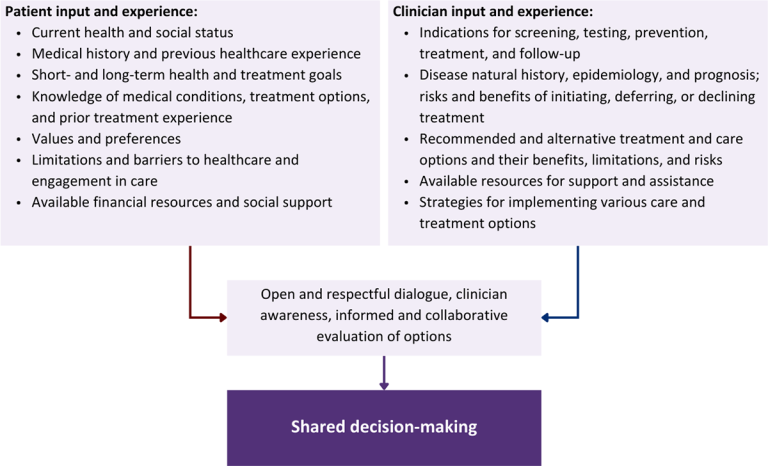
Download figure: Elements of Shared Decision-Making
Health equity: Adapting a shared decision-making approach that supports diverse populations is necessary to achieve more equitable and inclusive health outcomes [Castaneda-Guarderas, et al. 2016]. For instance, clinicians may need to incorporate cultural- and community-specific considerations into discussions with women, gender-diverse individuals, and young people concerning their sexual behaviors, fertility intentions, and pregnancy or lactation status. Shared decision-making offers an opportunity to build trust among marginalized and disenfranchised communities by validating their symptoms, values, and lived experience. Furthermore, it can allow for improved consistency in patient screening and assessment of prevention options and treatment plans, which can reduce the influence of social constructs and implicit bias [Castaneda-Guarderas, et al. 2016].
Clinician bias has been associated with health disparities and can have profoundly negative effects [FitzGerald and Hurst 2017; Hall, et al. 2015]. It is often challenging for clinicians to recognize and set aside personal biases and to address biases with peers and colleagues. Consciously or unconsciously, negative or stigmatizing assumptions are often made about patient characteristics, such as race, ethnicity, gender, sexual orientation, mental health, and substance use [Avery, et al. 2019; van Boekel, et al. 2013; Livingston, et al. 2012]. With its emphasis on eliciting patient information, a shared decision-making approach encourages clinicians to inquire about patients’ lived experiences rather than making assumptions and to recognize the influence of that experience in healthcare decision-making.
Stigma: Stigma may prevent individuals from seeking or receiving treatment and harm reduction services [Tsai, et al. 2019]. Among people with HIV, stigma and medical mistrust remain significant barriers to healthcare utilization, HIV diagnosis, and medication adherence and can affect disease outcomes [Turan, et al. 2017; Chambers, et al. 2015], and stigma among clinicians against people who use substances has been well-documented [Stone, et al. 2021; Tsai, et al. 2019; van Boekel, et al. 2013]. Sexual and reproductive health, including strategies to prevent HIV transmission, acquisition, and progression, may be subject to stigma, bias, social influence, and violence.
| SHARED DECISION-MAKING IN HIV CARE |
|
Resources and Suggested Reading
In addition to the references cited below, the following resources and suggested reading may be useful to clinicians.
| RESOURCES |
References
Acree ME, McNulty M, Blocker O, et al. Shared decision-making around anal cancer screening among black bisexual and gay men in the USA. Cult Health Sex 2020;22(2):201-16. [PMID: 30931831]
Avery JD, Taylor KE, Kast KA, et al. Attitudes toward individuals with mental illness and substance use disorders among resident physicians. Prim Care Companion CNS Disord 2019;21(1):18m02382. [PMID: 30620451]
Bertakis KD, Azari R. Patient-centered care is associated with decreased health care utilization. J Am Board Fam Med 2011;24(3):229-39. [PMID: 21551394]
Castaneda-Guarderas A, Glassberg J, Grudzen CR, et al. Shared decision making with vulnerable populations in the emergency department. Acad Emerg Med 2016;23(12):1410-16. [PMID: 27860022]
Chambers LA, Rueda S, Baker DN, et al. Stigma, HIV and health: a qualitative synthesis. BMC Public Health 2015;15:848. [PMID: 26334626]
Chen CH, Kang YN, Chiu PY, et al. Effectiveness of shared decision-making intervention in patients with lumbar degenerative diseases: a randomized controlled trial. Patient Educ Couns 2021;104(10):2498-2504. [PMID: 33741234]
Coronado-Vázquez V, Canet-Fajas C, Delgado-Marroquín MT, et al. Interventions to facilitate shared decision-making using decision aids with patients in primary health care: a systematic review. Medicine (Baltimore) 2020;99(32):e21389. [PMID: 32769870]
Coulter A, Collins A. Making shared decision-making a reality: no decision about me, without me. 2011. https://www.kingsfund.org.uk/sites/default/files/Making-shared-decision-making-a-reality-paper-Angela-Coulter-Alf-Collins-July-2011_0.pdf
Crawford J, Petrie K, Harvey SB. Shared decision-making and the implementation of treatment recommendations for depression. Patient Educ Couns 2021;104(8):2119-21. [PMID: 33563500]
FitzGerald C, Hurst S. Implicit bias in healthcare professionals: a systematic review. BMC Med Ethics 2017;18(1):19. [PMID: 28249596]
Greenwood BN, Hardeman RR, Huang L, et al. Physician-patient racial concordance and disparities in birthing mortality for newborns. Proc Natl Acad Sci U S A 2020;117(35):21194-21200. [PMID: 32817561]
Groot G, Waldron T, Barreno L, et al. Trust and world view in shared decision making with indigenous patients: a realist synthesis. J Eval Clin Pract 2020;26(2):503-14. [PMID: 31750600]
Hall WJ, Chapman MV, Lee KM, et al. Implicit racial/ethnic bias among health care professionals and its influence on health care outcomes: a systematic review. Am J Public Health 2015;105(12):e60-76. [PMID: 26469668]
Halperin B, Melnychuk R, Downie J, et al. When is it permissible to dismiss a family who refuses vaccines? Legal, ethical and public health perspectives. Paediatr Child Health 2007;12(10):843-45. [PMID: 19043497]
Institute of Medicine. Crossing the quality chasm: a new health system for the 21st century. 2001. https://www.ncbi.nlm.nih.gov/books/NBK222274/
KFF. Key data on health and health care by race and ethnicity. 2023 Mar 15. https://www.kff.org/racial-equity-and-health-policy/report/key-data-on-health-and-health-care-by-race-and-ethnicity/ [accessed 2023 May 19]
Livingston JD, Milne T, Fang ML, et al. The effectiveness of interventions for reducing stigma related to substance use disorders: a systematic review. Addiction 2012;107(1):39-50. [PMID: 21815959]
McNulty MC, Acree ME, Kerman J, et al. Shared decision making for HIV pre-exposure prophylaxis (PrEP) with black transgender women. Cult Health Sex 2022;24(8):1033-46. [PMID: 33983866]
Niburski K, Guadagno E, Abbasgholizadeh-Rahimi S, et al. Shared decision making in surgery: a meta-analysis of existing literature. Patient 2020;13(6):667-81. [PMID: 32880820]
Parish SJ, Hahn SR, Goldstein SW, et al. The International Society for the Study of Women’s Sexual Health process of care for the identification of sexual concerns and problems in women. Mayo Clin Proc 2019;94(5):842-56. [PMID: 30954288]
Robinson JH, Callister LC, Berry JA, et al. Patient-centered care and adherence: definitions and applications to improve outcomes. J Am Acad Nurse Pract 2008;20(12):600-607. [PMID: 19120591]
Scalia P, Durand MA, Elwyn G. Shared decision-making interventions: an overview and a meta-analysis of their impact on vaccine uptake. J Intern Med 2022;291(4):408-25. [PMID: 34700363]
Sewell WC, Solleveld P, Seidman D, et al. Patient-led decision-making for HIV preexposure prophylaxis. Curr HIV/AIDS Rep 2021;18(1):48-56. [PMID: 33417201]
Stalnikowicz R, Brezis M. Meaningful shared decision-making: complex process demanding cognitive and emotional skills. J Eval Clin Pract 2020;26(2):431-38. [PMID: 31989727]
Stone EM, Kennedy-Hendricks A, Barry CL, et al. The role of stigma in U.S. primary care physicians’ treatment of opioid use disorder. Drug Alcohol Depend 2021;221:108627. [PMID: 33621805]
Tsai AC, Kiang MV, Barnett ML, et al. Stigma as a fundamental hindrance to the United States opioid overdose crisis response. PLoS Med 2019;16(11):e1002969. [PMID: 31770387]
Turan B, Budhwani H, Fazeli PL, et al. How does stigma affect people living with HIV? The mediating roles of internalized and anticipated HIV stigma in the effects of perceived community stigma on health and psychosocial outcomes. AIDS Behav 2017;21(1):283-91. [PMID: 27272742]
van Boekel LC, Brouwers EP, van Weeghel J, et al. Stigma among health professionals towards patients with substance use disorders and its consequences for healthcare delivery: systematic review. Drug Alcohol Depend 2013;131(1-2):23-35. [PMID: 23490450]
Last updated on October 16, 2026
